
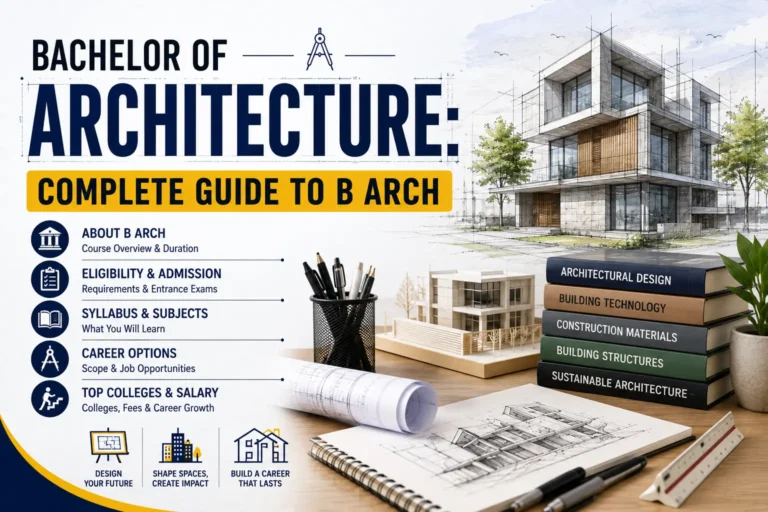
A Bachelor of Architecture is one of the most respected professional degrees for students who want to combine creativity, technology, engineering, and problem-solving into a meaningful career. Commonly known as B Arch, this undergraduate program prepares students to design functional, sustainable, and visually appealing spaces that improve the way people live, work, and interact.
Unlike many other degree programs, a Bachelor of Architecture focuses on both artistic expression and technical expertise. Students learn how to transform ideas into practical designs while considering environmental impact, safety standards, construction techniques, and user needs. Whether designing homes, commercial buildings, public spaces, or urban developments, architects play an essential role in shaping the built environment.
The demand for skilled architecture professionals continues to grow worldwide as cities expand, populations increase, and sustainability becomes a global priority. Modern architects are expected to create innovative buildings that are energy-efficient, environmentally responsible, and adaptable to changing lifestyles. This makes B Arch a valuable qualification for students interested in making a lasting impact through design.
This comprehensive guide explains everything you need to know about a Bachelor of Architecture. You will learn what the degree involves, the knowledge and skills you can develop, career opportunities, software commonly used in architecture, and why B Arch remains a globally recognized qualification for aspiring architects.
What Is a Bachelor of Architecture?
A Bachelor of Architecture is a professional undergraduate degree that prepares students for careers in architectural design, construction planning, and the development of sustainable built environments. The program combines theoretical knowledge with practical studio work, allowing students to understand how buildings are planned, designed, and constructed.
A typical Bachelor of Architecture curriculum includes architectural design, structural systems, building materials, environmental design, digital modeling, construction technology, and professional ethics. Throughout the program, students gradually build their ability to design projects that balance aesthetics, functionality, safety, and sustainability.
Unlike general design degrees, a Bachelor of Architecture provides specialized education that focuses on every stage of the architectural process, from conceptual sketches to construction documentation. Studio projects, research assignments, presentations, and portfolio development form a significant part of the learning experience.
As architecture continues to evolve with technology and environmental awareness, a Bachelor of Architecture equips graduates with the knowledge needed to contribute to residential, commercial, industrial, institutional, and urban development projects around the world.
What Does B Arch Stand For?
B Arch stands for Bachelor of Architecture. It is the commonly used abbreviation for the undergraduate degree in architecture offered by universities and educational institutions worldwide.
Although the duration and curriculum may vary slightly between countries, the overall purpose of a B Arch program remains the same, which is to educate future architects who can create innovative, safe, and sustainable buildings.
Students enrolled in a B Arch program study a wide range of subjects that combine science, engineering, art, technology, and environmental planning. By the end of the program, graduates possess the technical knowledge and creative confidence required to contribute to the architecture profession.
Why Architecture Is More Than Designing Buildings
Many people believe architecture is only about creating beautiful buildings. In reality, architecture is a multidisciplinary profession that influences communities, economies, and the environment.
Architects consider numerous factors before developing a design, including:
- User comfort
- Environmental sustainability
- Structural safety
- Accessibility
- Cultural significance
- Climate conditions
- Urban planning
- Energy efficiency
- Material selection
A Bachelor of Architecture teaches students how these elements work together to create spaces that improve people’s quality of life. Every design decision has social, economic, and environmental consequences, making architecture one of the most impactful professions in the world.
Why Choose a Bachelor of Architecture?
Choosing a Bachelor of Architecture offers more than a traditional university education. It provides an opportunity to develop creativity while solving practical challenges that affect millions of people every day.
Blend of Creativity and Technology
One of the biggest advantages of pursuing a Bachelor of Architecture is the combination of artistic creativity and technical expertise.
Architecture students learn to:
- Design functional spaces
- Create visually appealing structures
- Apply engineering principles
- Use advanced digital tools
- Solve real-world design challenges
This balance makes B Arch an excellent choice for students who enjoy both creative thinking and logical problem-solving.
Global Career Opportunities
Architecture is a globally recognized profession because every country requires professionals who can design residential buildings, commercial developments, transportation facilities, healthcare institutions, educational campuses, and public infrastructure.
Graduates with a Bachelor of Architecture can pursue opportunities in diverse industries, provided they meet local licensing or professional requirements where applicable.
Some regions experiencing continuous infrastructure development include:
| Region | Major Opportunities | Key Focus Areas |
|---|---|---|
| North America | Commercial and residential projects | Sustainable buildings |
| Europe | Heritage conservation and green design | Urban renewal |
| Asia-Pacific | Smart cities and infrastructure | Rapid urbanization |
| Middle East | Mega construction projects | Luxury developments |
| Australia | Sustainable housing | Community planning |
Opportunity to Shape Sustainable Communities
Environmental concerns have transformed architecture into one of the most influential professions for creating a sustainable future.
Today’s architects focus on:
- Energy-efficient buildings
- Renewable energy integration
- Water conservation
- Climate-responsive design
- Green building materials
- Sustainable urban planning
A Bachelor of Architecture introduces students to environmentally responsible design principles that contribute to healthier communities and reduced environmental impact.
A Profession with Long-Term Growth
Architecture continues to evolve alongside technological innovation, urban expansion, and environmental awareness.
Professionals with a Bachelor of Architecture can specialize in emerging fields such as:
- Sustainable architecture
- Digital construction
- Smart city planning
- Building Information Modeling
- Heritage conservation
- Urban design
- Architectural visualization
This diversity allows graduates to build careers aligned with changing industry needs.
What Will You Learn in a B Arch Program?
A B Arch program combines classroom learning with design studios, practical projects, software training, and collaborative assignments. Students gradually develop the ability to convert concepts into practical architectural solutions.
Architectural Design Principles
Architectural design forms the foundation of every Bachelor of Architecture program.
Students learn how to:
- Analyze design problems
- Develop design concepts
- Organize functional spaces
- Balance aesthetics and usability
- Present architectural ideas effectively
Studio-based learning encourages experimentation, creativity, and continuous improvement through feedback.
Building Construction and Materials
Understanding construction methods is essential for every architect.
Students explore:
- Concrete construction
- Steel structures
- Timber construction
- Masonry systems
- Glass applications
- Modern composite materials
A Bachelor of Architecture helps students understand how different materials influence durability, sustainability, cost, and design flexibility.
Structural Systems
Beautiful buildings must also be safe and structurally sound.
This part of a B Arch program introduces students to:
- Load distribution
- Structural behavior
- Foundations
- Columns
- Beams
- Roof systems
- Earthquake-resistant concepts
Architects collaborate closely with structural engineers, making this knowledge an essential part of professional education.
Environmental Design
Environmental design focuses on creating buildings that respond effectively to local climate and natural conditions.
Students learn about:
- Natural ventilation
- Daylighting
- Thermal comfort
- Solar orientation
- Energy conservation
- Climate-responsive architecture
These principles help architects create comfortable and environmentally responsible spaces.
Urban Planning Fundamentals
Buildings do not exist in isolation. They become part of neighborhoods, cities, and larger communities.
A Bachelor of Architecture introduces urban planning concepts such as:
- Land use planning
- Transportation systems
- Public spaces
- Community development
- Infrastructure planning
- Mixed-use development
Understanding these topics enables architects to contribute to more livable cities.
Digital Design and Visualization
Technology has transformed modern architecture.
Students in a Bachelor of Architecture program develop digital skills that allow them to visualize ideas before construction begins.
These include:
- Computer-aided drafting
- Three-dimensional modeling
- Building visualization
- Digital rendering
- Virtual walkthroughs
- Building Information Modeling
Digital tools improve communication between architects, engineers, clients, and construction teams while increasing design accuracy.
Key Learning Areas in a Bachelor of Architecture
| Learning Area | Knowledge Gained | Practical Application |
|---|---|---|
| Architectural Design | Space planning and design thinking | Residential and commercial projects |
| Construction Technology | Building materials and methods | Construction documentation |
| Structural Systems | Safety and stability | Building design coordination |
| Environmental Design | Sustainable architecture | Green building solutions |
| Urban Planning | Community development | City and regional planning |
| Digital Design | CAD, BIM, visualization | Professional architectural practice |
Core Subjects Covered in a Bachelor of Architecture
A Bachelor of Architecture curriculum is designed to provide a strong balance between creativity, technical knowledge, and professional practice. Each subject builds on the previous one, helping students understand how ideas become functional, safe, and sustainable buildings. While course names may differ across universities, the core areas of study remain similar around the world.
Architectural Design
Architectural Design is the heart of every Bachelor of Architecture program. Design studios encourage students to solve real-world problems by creating spaces that meet functional, environmental, and aesthetic requirements.
Students typically learn how to:
- Develop design concepts
- Plan residential and commercial buildings
- Create site-responsive designs
- Present architectural ideas through drawings and models
- Improve projects based on critiques and feedback
As students progress through B Arch, studio projects become more complex, requiring greater creativity and technical precision.
Building Technology
Building Technology introduces students to construction methods and the systems used to bring architectural designs to life.
Common topics include:
- Foundations
- Walls and partitions
- Roof construction
- Flooring systems
- Building envelopes
- Construction sequencing
- Sustainable building techniques
A strong understanding of building technology helps Bachelor of Architecture students create practical designs that can be successfully constructed.
History of Architecture
Architecture reflects the culture, technology, and values of different civilizations. Studying architectural history helps students understand how design has evolved over time.
Topics often include:
- Ancient architecture
- Classical architecture
- Gothic architecture
- Renaissance architecture
- Modern architecture
- Contemporary architecture
Learning from historical examples enables B Arch students to create designs that respect tradition while embracing innovation.
Structural Design
Architects work closely with structural engineers to ensure buildings remain safe and stable.
Students learn about:
- Structural behavior
- Load transfer
- Framing systems
- Foundations
- Reinforced concrete
- Steel structures
- Timber construction
Although architects do not perform every structural calculation, a Bachelor of Architecture provides enough knowledge to collaborate effectively with engineering professionals.
Building Services
Modern buildings require much more than walls and roofs. They depend on systems that improve safety, comfort, and functionality.
Students study:
- Electrical systems
- Plumbing
- Fire safety
- HVAC systems
- Lighting design
- Water supply
- Drainage systems
These systems must be integrated into architectural designs without compromising appearance or usability.
Landscape Architecture
Landscape architecture focuses on designing outdoor spaces that complement buildings and improve environmental quality.
Topics include:
- Parks
- Gardens
- Public plazas
- Campus planning
- Green infrastructure
- Open space design
This subject helps Bachelor of Architecture students understand the relationship between buildings and their surroundings.
Urban Design
Urban Design examines how buildings interact within cities and communities.
Students explore:
- Street design
- Public spaces
- Walkability
- Mixed-use developments
- Transportation planning
- Community engagement
Urban Design encourages future architects to think beyond individual buildings and consider the broader impact of development.
Professional Practice
Professional Practice prepares students for real-world architectural careers.
Typical topics include:
- Ethics
- Contracts
- Building regulations
- Project management
- Client communication
- Professional responsibilities
Understanding these concepts helps B Arch graduates transition from education into professional practice.
Core Subjects in a Bachelor of Architecture
| Subject | What Students Learn | Career Relevance |
|---|---|---|
| Architectural Design | Design process and space planning | Architect, Designer |
| Building Technology | Construction methods | Construction projects |
| Structural Design | Structural concepts | Building coordination |
| Urban Design | City planning principles | Urban development |
| Professional Practice | Ethics and project management | Professional architecture |
Essential Skills You Develop During B Arch
A Bachelor of Architecture develops both technical and personal skills that remain valuable throughout an architect’s career. These abilities also apply to related fields such as urban planning, construction management, interior architecture, and sustainable design.
Creative Thinking
Creativity is one of the defining qualities of successful architects.
Students learn how to:
- Generate original ideas
- Explore multiple design solutions
- Improve existing concepts
- Balance innovation with functionality
Creative thinking allows architects to respond effectively to unique client needs and environmental challenges.
Design Thinking
Design Thinking is a structured process used to solve problems through research, experimentation, and continuous improvement.
Students learn to:
- Understand user needs
- Analyze design challenges
- Prototype ideas
- Test solutions
- Refine projects
This approach is valuable throughout a Bachelor of Architecture program and professional practice.
Technical Drawing
Although digital tools are widely used, technical drawing remains an essential architectural skill.
Students practice:
- Floor plans
- Elevations
- Sections
- Site plans
- Construction drawings
- Detail drawings
Accurate drawings help communicate ideas to engineers, contractors, and clients.
CAD and BIM Skills
Technology plays an important role in architecture today.
A Bachelor of Architecture introduces students to digital tools that improve productivity and collaboration.
Students learn how to:
- Produce digital drawings
- Develop 3D building models
- Coordinate multidisciplinary projects
- Detect design conflicts
- Generate construction documentation
CAD and BIM have become standard skills in architecture firms worldwide.
Communication Skills
Architects regularly communicate with clients, engineers, contractors, consultants, and government authorities.
Throughout B Arch, students improve their ability to:
- Present ideas confidently
- Explain design decisions
- Write technical reports
- Deliver presentations
- Participate in design discussions
Strong communication helps architects build trust and manage projects effectively.
Problem-Solving
Every architectural project presents unique challenges.
Students develop the ability to solve problems related to:
- Space planning
- Budget limitations
- Environmental conditions
- Site constraints
- Structural requirements
- User experience
Problem-solving remains one of the most valuable professional skills after completing a Bachelor of Architecture.
Project Management
Architecture projects involve many stakeholders and strict deadlines.
Students gain experience in:
- Planning project phases
- Scheduling work
- Managing resources
- Coordinating teams
- Meeting deadlines
- Monitoring progress
These skills become increasingly important as architects take on leadership roles.
Collaboration and Teamwork
Architecture is rarely an individual profession.
Students frequently collaborate with:
- Engineers
- Interior designers
- Landscape architects
- Contractors
- Urban planners
- Environmental consultants
Learning teamwork during a Bachelor of Architecture prepares graduates for multidisciplinary professional environments.
Architecture Software You May Learn
Technology has transformed architectural practice. Most Bachelor of Architecture programs introduce students to software used throughout the design and construction process.
- AutoCAD – AutoCAD remains one of the most widely used drafting tools.
Students use it to create:- Floor plans
- Elevations
- Sections
- Construction documentation
- Revit – Revit supports Building Information Modeling and allows architects to create intelligent building models.
Common applications include:- 3D modeling
- Documentation
- Collaboration
- Quantity estimation
- SketchUp – SketchUp is popular for conceptual design because it allows rapid creation of three-dimensional models.
Students often use it during the early design stages. - Rhino – Rhino specializes in complex geometry and free-form architectural design.
It is frequently used for:- Parametric forms
- Curved structures
- Innovative building concepts
- ArchiCAD – ArchiCAD is another Building Information Modeling platform that supports integrated architectural workflows.
Students learn to:- Create BIM models
- Produce drawings
- Coordinate documentation
- Lumion – Lumion converts architectural models into realistic visualizations.
Students create:- Photorealistic renderings
- Animations
- Walkthrough videos
- Enscape – Enscape enables real-time visualization directly from BIM software.
It supports:- Virtual reality experiences
- Interactive presentations
- Instant rendering
- Adobe Photoshop & Illustrator – Graphic presentation remains an important part of architectural communication.
Students use Adobe software to:- Edit presentation boards
- Enhance renderings
- Create diagrams
- Design portfolios
Popular Software Used in a Bachelor of Architecture
| Software | Primary Purpose | Industry Use |
|---|---|---|
| AutoCAD | Technical drafting | Construction documents |
| Revit | Building Information Modeling | Integrated project delivery |
| SketchUp | Conceptual modeling | Early design development |
| Rhino | Complex geometry | Advanced architectural design |
| Lumion | Visualization | Client presentations |
| Adobe Photoshop | Graphic editing | Portfolio and presentation boards |
Career Opportunities After a Bachelor of Architecture
A Bachelor of Architecture opens doors to a wide range of professional opportunities. While many graduates become licensed architects, others pursue specialized careers that combine architecture with technology, sustainability, planning, and design.
- Licensed Architect – Licensed architects design residential, commercial, institutional, and public buildings while ensuring projects meet safety standards and local regulations.
- Urban Planner – Urban planners help shape cities by planning transportation systems, housing developments, public spaces, and infrastructure projects.
- Interior Architect – Interior architects focus on designing functional indoor environments that improve comfort, efficiency, and aesthetics.
- Landscape Architect – Landscape architects design parks, campuses, recreational spaces, gardens, and environmentally sustainable outdoor environments.
- BIM Specialist – BIM Specialists manage digital building models that improve collaboration among architects, engineers, and contractors throughout construction projects.
- Sustainable Design Consultant – These professionals develop environmentally responsible building strategies that reduce energy consumption and improve long-term performance.
- Construction Project Manager – Construction Project Managers coordinate planning, budgeting, scheduling, and execution to ensure projects are completed successfully.
- Architectural Visualizer – Architectural visualizers produce realistic renderings, animations, and virtual experiences that help clients understand design concepts before construction begins.
- Design Consultant – Design consultants provide expert advice on architectural planning, space utilization, aesthetics, functionality, and user experience across different types of projects.
Career Options After a Bachelor of Architecture
| Career | Primary Responsibilities | Typical Work Environment |
|---|---|---|
| Licensed Architect | Building design and project coordination | Architecture firms |
| Urban Planner | Community and city planning | Government and planning agencies |
| BIM Specialist | Digital building modeling | Architecture and engineering firms |
| Construction Project Manager | Project planning and execution | Construction companies |
| Architectural Visualizer | Renderings and animations | Design studios and visualization firms |
| Sustainable Design Consultant | Green building strategies | Sustainability consultancies |
Industries That Hire B Arch Graduates
Graduates with a Bachelor of Architecture are employed across multiple industries because architectural knowledge extends far beyond building design.
- Architecture Firms – Traditional architecture firms remain one of the largest employers of B Arch graduates, offering opportunities in residential, commercial, institutional, and mixed-use projects.
- Construction Companies – Construction companies hire architects to coordinate designs, review drawings, supervise implementation, and improve project efficiency.
- Real Estate Developers – Developers work closely with architects during planning, feasibility studies, master planning, and property development.
- Government Organizations – Government agencies recruit architecture professionals for public infrastructure, housing, transportation, heritage conservation, and civic development projects.
- Urban Planning Agencies – Planning organizations rely on architecture graduates to contribute to regional planning, zoning strategies, and sustainable city development.
- Infrastructure Companies – Infrastructure projects involving airports, railways, highways, hospitals, and educational campuses often require professionals with a Bachelor of Architecture.
- Interior Design Firms – Interior design companies value architecture graduates for their understanding of spatial planning, construction systems, and building functionality.
- Research and Academic Institutions – Some graduates pursue research, teaching, policy development, or innovation in architecture, sustainability, and construction technologies.
Bachelor of Architecture vs Other Related Degrees
Choosing the right degree is an important step toward building a successful career. While a Bachelor of Architecture shares similarities with several design and engineering disciplines, each program has a unique focus, learning approach, and career outcome.
Understanding these differences helps prospective students select the program that best aligns with their interests and long-term goals.
| Degree | Primary Focus | Typical Career Paths |
|---|---|---|
| Bachelor of Architecture (B Arch) | Building design, planning, sustainability | Architect, Urban Planner, BIM Specialist |
| Civil Engineering | Structural analysis and infrastructure | Civil Engineer, Structural Engineer |
| Interior Design | Interior spaces and aesthetics | Interior Designer, Space Planner |
| Urban Planning | City and regional development | Urban Planner, Policy Consultant |
| Landscape Architecture | Outdoor environments | Landscape Architect, Environmental Designer |
B Arch vs Civil Engineering
Although both disciplines contribute to the construction industry, their responsibilities differ significantly.
A Bachelor of Architecture focuses on designing buildings that balance functionality, aesthetics, sustainability, and user experience. Students develop creative and technical skills to create spaces that meet social and environmental needs.
Civil Engineering focuses on structural safety, infrastructure, transportation systems, bridges, dams, and construction technology. Civil engineers calculate structural loads, select engineering systems, and ensure buildings can safely withstand various forces.
Students who enjoy creativity, visualization, and design may find B Arch more suitable, while those interested in mathematics, structural analysis, and engineering calculations may prefer Civil Engineering.
B Arch vs Interior Design
Interior Design focuses primarily on indoor environments, furniture layouts, lighting, finishes, materials, and user comfort.
A Bachelor of Architecture provides a broader understanding of entire buildings, including structural systems, site planning, environmental design, and construction technology.
Architects often collaborate with interior designers throughout a project, with each professional contributing specialized expertise.
B Arch vs Urban Planning
Urban Planning examines how cities develop and function.
Urban planners focus on transportation, housing policies, zoning regulations, environmental planning, and community development.
A Bachelor of Architecture concentrates on individual buildings while also introducing urban design concepts. Students interested in large-scale city development may pursue Urban Planning after completing B Arch.
B Arch vs Landscape Architecture
Landscape Architecture specializes in designing outdoor environments such as parks, gardens, campuses, waterfronts, and recreational spaces.
While Bachelor of Architecture students study landscape design as part of their education, Landscape Architecture explores this area in much greater depth.
Many professionals collaborate on projects that require expertise in both disciplines.
Emerging Trends in Architecture
Architecture continues to evolve as technology, sustainability, and urban development create new opportunities. A modern Bachelor of Architecture prepares students to understand these changing trends and adapt to future industry requirements.
Sustainable Architecture
Environmental responsibility has become a central focus of architecture.
Sustainable architecture emphasizes:
- Energy efficiency
- Water conservation
- Renewable materials
- Passive cooling
- Carbon reduction
- Green certifications
Graduates with a Bachelor of Architecture increasingly participate in projects that reduce environmental impact while improving occupant comfort.
Smart Cities
Smart cities integrate digital technologies with urban infrastructure to improve transportation, energy management, communication, and public services.
Architects contribute by designing buildings that connect seamlessly with intelligent infrastructure and support efficient resource management.
Artificial Intelligence in Architecture
Artificial Intelligence is transforming many aspects of architectural practice.
Applications include:
- Design optimization
- Space planning
- Energy analysis
- Construction scheduling
- Predictive maintenance
- Building performance evaluation
Although AI supports decision-making, architects continue to provide creativity, critical thinking, and professional judgment.
Building Information Modeling (BIM)
Building Information Modeling has become a standard practice across the global construction industry.
Instead of producing separate drawings, BIM creates intelligent digital models containing information about every component of a building.
Benefits include:
- Better collaboration
- Reduced design conflicts
- Improved project coordination
- Accurate quantity estimation
- Efficient facility management
Most Bachelor of Architecture programs now introduce BIM as an essential professional skill.
Modular Construction
Modular construction involves manufacturing building components in controlled environments before assembling them on-site.
Advantages include:
- Faster construction
- Reduced waste
- Better quality control
- Lower environmental impact
- Improved safety
Architects are increasingly designing buildings suitable for modular construction methods.
Parametric Design
Parametric design uses algorithms and computational tools to generate complex architectural forms.
This approach enables architects to explore multiple design options while optimizing performance, material usage, and environmental response.
Net-Zero Buildings
Net-zero buildings aim to produce as much energy as they consume through renewable energy systems and efficient building design.
Architects contribute by improving insulation, daylight utilization, ventilation, and renewable energy integration.
Global Demand for Bachelor of Architecture Graduates
The demand for graduates with a Bachelor of Architecture continues to grow as countries invest in infrastructure, housing, transportation, sustainability, and urban redevelopment. While licensing requirements vary by region, architectural knowledge remains valuable across global markets.
Career Opportunities in North America
North America offers opportunities in commercial development, healthcare facilities, educational institutions, sustainable housing, and mixed-use developments.
Growing investment in green buildings and infrastructure modernization creates continued demand for architecture professionals.
Growing Demand Across Europe
Europe emphasizes sustainable construction, heritage conservation, and urban regeneration.
Architects contribute to restoring historic buildings while integrating modern technologies and environmentally responsible design principles.
Infrastructure Expansion in the Middle East
Large-scale infrastructure projects continue to drive demand for architectural professionals across the Middle East.
Projects commonly include:
- Airports
- Smart cities
- Tourism developments
- Commercial districts
- Cultural landmarks
- Residential communities
Rapid Urbanization in the Asia-Pacific Region
Rapid population growth and urban expansion have increased the need for architects across the Asia-Pacific region.
Architects support:
- Affordable housing
- Public transportation
- Educational campuses
- Healthcare facilities
- Sustainable urban planning
Architecture Careers in Australia
Australia maintains strong demand for professionals involved in residential housing, environmental design, public infrastructure, and sustainable community development.
Energy-efficient construction remains a major priority.
Opportunities in Emerging Economies
Emerging economies continue investing in housing, transportation networks, industrial development, and public infrastructure.
Graduates with a Bachelor of Architecture can contribute to projects that improve living standards and support economic growth.
Global Career Outlook for B Arch Graduates
| Region | Major Growth Areas | Career Opportunities |
|---|---|---|
| North America | Sustainable construction | Architect, BIM Specialist |
| Europe | Heritage conservation | Urban Designer, Architect |
| Middle East | Mega infrastructure | Design Consultant |
| Asia-Pacific | Smart cities | Urban Planner |
| Australia | Green housing | Sustainable Design Consultant |
| Emerging Economies | Infrastructure expansion | Project Architect |
Higher Education After B Arch
Completing a Bachelor of Architecture opens pathways to advanced education and specialization.
- Master of Architecture (M.Arch) – A Master of Architecture allows graduates to deepen their expertise in architectural theory, research, advanced design, and specialized practice.
- Urban Design – Urban Design focuses on shaping cities through public spaces, transportation systems, and community-centered development.
- Landscape Architecture – Students interested in outdoor environments can specialize in landscape planning, ecological restoration, and environmental design.
- Sustainable Design – Sustainable Design explores green buildings, renewable energy integration, environmental performance, and climate-responsive architecture.
- Construction Management – Construction Management prepares professionals to oversee budgeting, scheduling, procurement, quality control, and project execution.
- Project Management – Project Management develops leadership, communication, planning, and risk management skills for complex construction and infrastructure projects.
- Real Estate Development – Real Estate Development combines architecture with finance, investment, planning, and property management.
Graduates learn how design decisions influence project value and market demand.
Common Challenges Students Face During B Arch
Although a Bachelor of Architecture is rewarding, students should be prepared for academic and creative challenges.
- Managing Long Studio Hours – Design studios often require extended working sessions to refine ideas, develop drawings, and complete models.
Effective planning helps students maintain productivity while avoiding burnout. - Handling Design Critiques – Constructive feedback plays an essential role in architectural education.
Students gradually learn how to:- Accept criticism professionally
- Improve designs
- Defend design decisions
- Communicate ideas confidently
- Balancing Time and Deadlines
- Architecture projects involve multiple stages including research, sketches, drawings, digital models, presentations, and reports.
Good time management helps students meet deadlines without compromising quality. - Learning Professional Design Software – Software proficiency requires continuous practice.
Students often spend significant time mastering drafting, modeling, rendering, and visualization tools throughout their B Arch program. - Building a Strong Architecture Portfolio – A professional portfolio showcases design ability, creativity, technical knowledge, and project experience.
Developing an impressive portfolio requires careful selection of projects, high-quality presentation, and continuous refinement.
Is a Bachelor of Architecture the Right Choice for You?
Choosing a Bachelor of Architecture should be based on genuine interest rather than trends or external expectations.
Who Should Study B Arch?
This degree is well suited for individuals who enjoy:
- Creative thinking
- Drawing and visualization
- Problem-solving
- Technology
- Sustainable design
- Building environments
- Collaborative work
Qualities of Successful Architecture Students
Successful architecture students often demonstrate:
- Curiosity
- Creativity
- Patience
- Attention to detail
- Critical thinking
- Communication skills
- Adaptability
- Persistence
These qualities help students succeed both academically and professionally.
Passion vs Profession
Many students choose architecture because they enjoy art or sketching.
While creativity is valuable, a Bachelor of Architecture also requires technical knowledge, analytical thinking, teamwork, and project management.
Understanding both the creative and professional aspects helps students make informed decisions.
Things to Consider Before Choosing Architecture
Before enrolling in a B Arch program, consider:
- Your interest in design
- Willingness to learn technical subjects
- Comfort with collaborative work
- Commitment to continuous learning
- Interest in sustainability and innovation
Selecting architecture should be based on long-term career goals rather than short-term trends.
Common Myths About Bachelor of Architecture
Many misconceptions surround a Bachelor of Architecture, often leading students to underestimate the scope and opportunities within the profession. Understanding the reality behind these myths can help aspiring architects make informed career decisions.
Architects Only Design Houses
This is one of the most common misconceptions.
While residential design is an important area of architecture, professionals work on a wide variety of projects, including:
- Airports
- Hospitals
- Hotels
- Educational institutions
- Museums
- Sports complexes
- Shopping centers
- Corporate offices
- Transportation hubs
- Industrial facilities
A Bachelor of Architecture prepares graduates to work across multiple sectors of the built environment rather than focusing only on residential buildings.
Architecture Is Only About Drawing
Drawing is only one communication tool used by architects.
Modern architectural practice also involves:
- Site analysis
- Environmental research
- Digital modeling
- Building regulations
- Structural coordination
- Sustainability planning
- Project management
- Client presentations
- Construction documentation
Technology has transformed the profession, making analytical and technical skills just as important as artistic ability.
B Arch Is Only for Creative Students
Creativity is valuable, but it is only one aspect of architecture.
Students pursuing B Arch also develop:
- Logical reasoning
- Mathematical understanding
- Problem-solving
- Communication
- Leadership
- Technical knowledge
- Research skills
- Time management
Successful architects combine creativity with analytical thinking to develop practical design solutions.
Career Opportunities Are Limited
Many people assume architects can only work in architecture firms.
In reality, graduates with a Bachelor of Architecture find opportunities in:
- Construction
- Urban planning
- Interior architecture
- Real estate
- Infrastructure
- Sustainable design
- Government agencies
- Digital visualization
- Research
- Education
- Consulting
This diversity makes architecture one of the most flexible design professions.
Architects Only Work in Offices
Architects spend time in multiple environments depending on the project stage.
Their work often includes:
- Site visits
- Client meetings
- Design studios
- Construction inspections
- Community consultations
- Project presentations
- Team coordination
The profession combines office work with field experience and collaboration across different disciplines.
Future Scope of Bachelor of Architecture
The future of architecture is shaped by rapid technological advancement, environmental responsibility, and urban development. A Bachelor of Architecture provides a strong foundation for adapting to these evolving industry demands.
Smart Cities and Sustainable Infrastructure
Governments and private organizations continue investing in smart cities that integrate technology, sustainability, and efficient urban planning.
Architects contribute by designing:
- Mixed-use developments
- Smart residential communities
- Intelligent transportation hubs
- Sustainable public spaces
- Energy-efficient commercial buildings
As urban populations grow, the need for innovative architectural solutions is expected to increase.
Green Building Design
Green building practices have become an essential part of modern architecture.
Architects increasingly focus on:
- Low-carbon construction
- Renewable materials
- Passive design strategies
- Rainwater harvesting
- Solar energy integration
- Indoor environmental quality
A Bachelor of Architecture equips students with the knowledge required to contribute to environmentally responsible development.
AI and Digital Transformation
Digital technologies continue to improve architectural workflows.
Emerging tools support:
- Design automation
- Building simulations
- Energy analysis
- Construction planning
- Digital collaboration
- Data-driven decision making
Rather than replacing architects, these technologies improve efficiency while allowing professionals to focus on creativity and strategic thinking.
Entrepreneurship in Architecture
Many graduates establish independent architecture or design consulting firms after gaining professional experience.
Entrepreneurial opportunities include:
- Architecture studios
- Interior design consultancies
- Visualization companies
- Sustainable design firms
- BIM consulting
- Design-build businesses
- Real estate advisory services
A Bachelor of Architecture provides technical knowledge that can support both employment and business ownership.
Global Mobility for Architects
Architecture is recognized internationally, although licensing requirements vary by country and region.
Professionals often work on:
- International design competitions
- Global infrastructure projects
- Multinational architecture firms
- Remote design collaborations
- Cross-border consulting assignments
This international relevance makes B Arch an attractive degree for students seeking global career opportunities.
Frequently Asked Questions About Bachelor of Architecture
- What is a Bachelor of Architecture?
A Bachelor of Architecture is a professional undergraduate degree that prepares students for careers in architectural design, construction planning, sustainable development, and the built environment. - What does B Arch stand for?
B Arch stands for Bachelor of Architecture, a professional degree focused on architectural design, construction technology, environmental planning, and urban development. - Is a Bachelor of Architecture worth it?
Yes. A Bachelor of Architecture is a valuable degree for students interested in combining creativity with technical expertise. It offers opportunities across architecture, construction, urban planning, sustainability, and related industries. - Is B Arch difficult?
A B Arch program can be academically demanding because it combines design studios, technical subjects, project work, presentations, and software training. Effective time management and consistent practice help students succeed. - How long does a Bachelor of Architecture take?
The duration varies by country and university. In many regions, a Bachelor of Architecture typically takes between four and five years to complete. - What skills are required for B Arch?
Students benefit from developing:- Creativity
- Problem-solving
- Communication
- Technical drawing
- Digital design
- Critical thinking
- Collaboration
- Time management
- What jobs can I get after B Arch?
Graduates can pursue careers such as:- Architect
- Urban Planner
- Landscape Architect
- Interior Architect
- BIM Specialist
- Construction Project Manager
- Sustainable Design Consultant
- Architectural Visualizer
- Design Consultant
- Can B Arch graduates work internationally?
Yes. A Bachelor of Architecture provides knowledge that is recognized worldwide. However, professional licensing, registration, or certification requirements differ between countries. - Is mathematics important in B Arch?
Yes. Mathematics supports structural understanding, measurements, geometry, and technical design. However, architecture also emphasizes creativity, visualization, and design thinking. - What software do architecture students learn?
Most Bachelor of Architecture programs introduce software such as:- AutoCAD
- Revit
- SketchUp
- Rhino
- ArchiCAD
- Lumion
- Enscape
- Adobe Photoshop
- Adobe Illustrator
- Can architects work remotely?
Many architectural tasks, including design development, drafting, modeling, rendering, and virtual collaboration, can be completed remotely. Site visits and client meetings, however, often require in-person participation. - What is the difference between B Arch and Civil Engineering?
A Bachelor of Architecture focuses on building design, planning, sustainability, and user experience, while Civil Engineering emphasizes structural systems, infrastructure, and engineering calculations. - Can I pursue higher education after B Arch?
Yes. Graduates commonly pursue advanced studies in:- Master of Architecture
- Urban Design
- Landscape Architecture
- Sustainable Design
- Construction Management
- Project Management
- Real Estate Development
- What industries hire architecture graduates?
Graduates with a Bachelor of Architecture work across many industries, including architecture firms, construction companies, infrastructure organizations, government agencies, real estate development, interior design, research institutions, and consulting firms. - What is the future scope of architecture?
The future of architecture is promising due to growing investment in sustainable buildings, smart cities, digital construction technologies, and environmentally responsible urban development. Professionals who continuously update their skills are likely to find diverse career opportunities.
Conclusion
A Bachelor of Architecture is much more than a degree in building design. It is a professional program that combines creativity, technical knowledge, environmental awareness, and practical problem-solving to prepare students for meaningful careers in the built environment.
Throughout a B Arch program, students develop expertise in architectural design, construction technology, structural systems, urban planning, digital visualization, sustainability, and project management. These competencies enable graduates to contribute to projects ranging from residential homes and commercial buildings to smart cities and public infrastructure.
The career possibilities after completing a Bachelor of Architecture extend well beyond traditional architectural practice. Graduates can work in urban planning, landscape architecture, interior architecture, Building Information Modeling, sustainable design, construction management, real estate development, research, consulting, and many other related fields. This versatility makes B Arch a globally respected qualification with opportunities across diverse industries.
As technology continues to reshape the construction sector and sustainability becomes a central priority, the demand for skilled architecture professionals is expected to remain strong. Digital tools, green building practices, smart city initiatives, and innovative construction methods are creating exciting opportunities for future architects to make a lasting impact on communities worldwide.
If you enjoy creative thinking, problem-solving, collaboration, and designing spaces that improve people’s lives, a Bachelor of Architecture could be the right path for your academic and professional journey. By understanding the curriculum, career opportunities, challenges, and future scope outlined in this guide, you can make an informed decision about whether B Arch aligns with your interests, strengths, and long-term career goals.