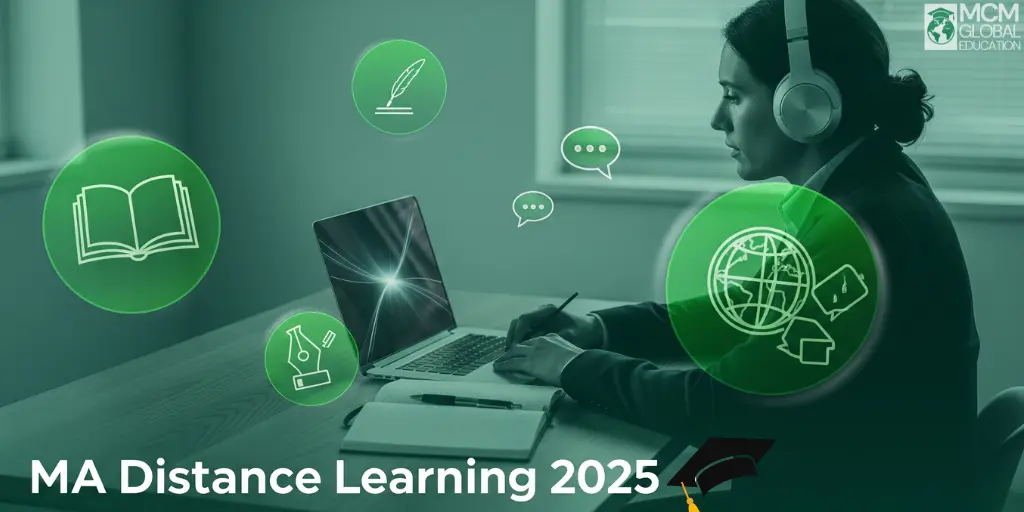
Across industries and sectors, professionals are increasingly looking for ways to advance their education without stepping away from their careers or personal responsibilities. Postgraduate education is no longer limited to full-time, campus-based study. MA distance learning has emerged as a practical academic pathway that allows learners to gain advanced qualifications while remaining professionally active.
With improvements in digital education platforms, remote learning infrastructure, and academic oversight, distance-based Master of Arts programs have become widely accepted and academically rigorous. Universities across the world now offer MA distance learning options that combine flexibility with structured learning outcomes, making them suitable for working professionals, caregivers, and international students.
This article explains what MA distance learning involves, why it is gaining relevance, which universities offer such programs globally, how to evaluate available options, the benefits for professionals, and the challenges learners should be aware of before enrolling.
What Is MA Distance Learning?
MA distance learning refers to postgraduate Master of Arts programs delivered primarily through online or blended formats. These programs are designed to provide academic depth equivalent to on-campus degrees while allowing students to study remotely.
Typical features of MA distance learning programmes include flexible study schedules, digital access to lectures and academic resources, online discussions and assessments, and recognised qualifications when offered by accredited institutions. Some programmes may include optional contact sessions, workshops, or examination centres, depending on institutional policy.
The core objective of MA distance learning is to remove geographic and time-related barriers to higher education while preserving academic standards.
Why MA Distance Learning Is Becoming Increasingly Relevant
Several structural and professional shifts have contributed to the growing relevance of MA distance learning.
- Professionals often need advanced qualifications to progress into teaching, research, policy, communication, or leadership roles. At the same time, career and family responsibilities make full-time campus study impractical. MA distance learning addresses this gap by enabling continued employment alongside academic development.
- Cost considerations also play a role. Distance programmes generally reduce expenses related to relocation, housing, and commuting. Additionally, global access allows learners to enrol in universities outside their home country without the complexities of relocation.
- Improvements in accreditation frameworks and digital pedagogy have further strengthened confidence in distance-based postgraduate degrees.
Universities Offering MA Distance Learning Around the World
Many universities in India and internationally now offer MA distance learning programs across a wide range of arts disciplines. The table below illustrates examples of institutions and their offerings.
| University / Institution | Country / Region | Sample MA Specializations Offered | Key Advantages / Notes |
|---|---|---|---|
| Indira Gandhi National Open University (IGNOU) | India | English, Sociology, Political Science, History, Psychology, Hindi, Public Administration | Very large network of regional support centres, flexible duration (2-5 years), recognised nationwide. |
| Amity University (Online) | India | Journalism & Mass Communication, English, etc. | Modern digital infrastructure, virtual classrooms, mentorship. |
| Manipal University Online | India | MA in Journalism, Mass Communication etc. | Reputed academic record, blended & fully online delivery, good student support. |
| Chandigarh University Online | India | English, Psychology etc. | Strong NAAC grading, good online tools, relatively moderate fees. |
| Lovely Professional University Online | India | English, Political Science, Economics, Sociology | 24/7 learning materials, active online student engagement. |
| University of Madras | India | Various arts disciplines e.g. English, History, Philosophy | Traditional prestige, combining older pedagogy with newer online delivery. |
| Asia e University (AeU) | Malaysia | Likely arts related MA programmes via online / blended modes | Offers online + blended; strong regional cooperation in Asia. |
| Arden University | UK | MA programmes in subjects like Psychology, Management, etc., via online / blended learning | UK-based with recognition, flexible delivery, options for professionals globally. |
How to Compare MA Distance Learning Programs
Choosing the right MA distance learning program requires careful comparison across multiple dimensions. The table below outlines key evaluation criteria.
| Criterion | What to Look For | Why It Matters |
|---|---|---|
| Accreditation & Recognition | Is the university recognised by national regulatory bodies, distance education bureaus, or international ranking agencies? | Ensures the degree will be accepted for work, further study, visa equivalencies etc. |
| Specialisation Offerings | Does it offer the arts subjects you want (e.g. English, Education, History, Psychology etc.)? Are electives available? | Ensures the curriculum matches your career goals or intellectual interests. |
| Learning Mode and Flexibility | Fully online vs blended vs occasional contact; synchronous vs asynchronous classes. | Determines how much schedule and location flexibility you actually get. |
| Student Support & Resources | Access to digital libraries, mentorship, discussion forums, live sessions, peer collaboration. | Supports learning, keeps you motivated, helps in case of challenges. |
| Cost / Fee Structure | Total fees, payment schedules, local vs international fees, whether study material/exams or travel costs are extra. | Impacts affordability. Hidden costs can erode perceived savings. |
| Duration & Time-to-Completion | Some programmes allow more time; span from 1–2 years depends on full-/part-time, flexibility. | Helpful if you need more time due to job/family commitments. |
| Global Transferability & Acceptance | Will credits or degree be accepted abroad or in professional settings? | Important if you plan work, immigration, further study overseas. |
Benefits of MA Distance Learning for Working Professionals
MA distance learning offers several advantages specifically suited to professionals:
- One major benefit is career continuity. Learners can pursue postgraduate education without interrupting employment, reducing opportunity costs and maintaining professional momentum. Knowledge gained through coursework can often be applied directly to current roles in communication, education, administration, or policy-related work.
- Geographic flexibility is another advantage. Students can study from their home country or while relocating for work. Arts programmes also enhance transferable skills such as critical thinking, communication, cultural awareness, and research ability, which are valuable across industries.
- MA distance learning is also suitable for professionals seeking career transitions, such as moving into teaching, research, development sectors, or cultural institutions, without returning to full-time campus study.
Challenges in MA Distance Learning and Ways to Address Them
Despite its advantages, MA distance learning has certain limitations that learners should consider:
- Reduced face-to-face interaction may affect engagement for some students. This can be addressed by choosing programmes with strong virtual discussions, collaborative assignments, and regular academic feedback.
- Distance learning requires a high level of self-discipline and time management. Professionals should realistically assess their availability and establish consistent study routines.
- Recognition concerns may arise if the institution lacks credibility. Verifying accreditation and seeking feedback from alumni can reduce this risk.
- Technical requirements such as stable internet access and appropriate devices are essential. Reviewing technical needs in advance helps avoid disruptions.
Academic and Career Trends Influencing MA Distance Learning
MA distance learning continues to evolve alongside broader changes in higher education. Blended learning models are becoming more common, with optional in-person workshops or short academic residencies.
Technology-driven tools such as adaptive learning platforms and AI-supported feedback are improving learning outcomes. Modular and stackable course structures are also emerging, allowing learners to accumulate credits gradually toward a full MA degree.
There is a growing emphasis on employability, with arts programs integrating applied research, project-based learning, and interdisciplinary approaches aligned with industry needs. International collaborations between universities are further expanding global recognition.
Is MA Distance Learning the Right Choice for You
Before enrolling, prospective students should reflect on several questions. Consider whether an MA is necessary for your intended career progression. Assess whether the subject offered aligns with your interests and professional goals.
Evaluate your ability to manage coursework alongside work and personal responsibilities. Review costs carefully and confirm degree recognition in the regions where you plan to work or study further. Finally, examine the level of academic and technical support provided by the institution.
Conclusion
MA distance learning has become a structured and credible academic pathway for professionals seeking postgraduate education without leaving their careers. With universities worldwide offering recognized programs across diverse arts disciplines, learners have access to flexible and globally relevant options.
While distance learning requires careful planning and self-motivation, informed program selection and realistic expectations can lead to meaningful academic and professional outcomes. For those who value flexibility, accessibility, and continued career engagement, MA distance learning represents a practical and forward-looking educational choice.